Harvesting Wild Rice - Manoominikwe Art Print




-
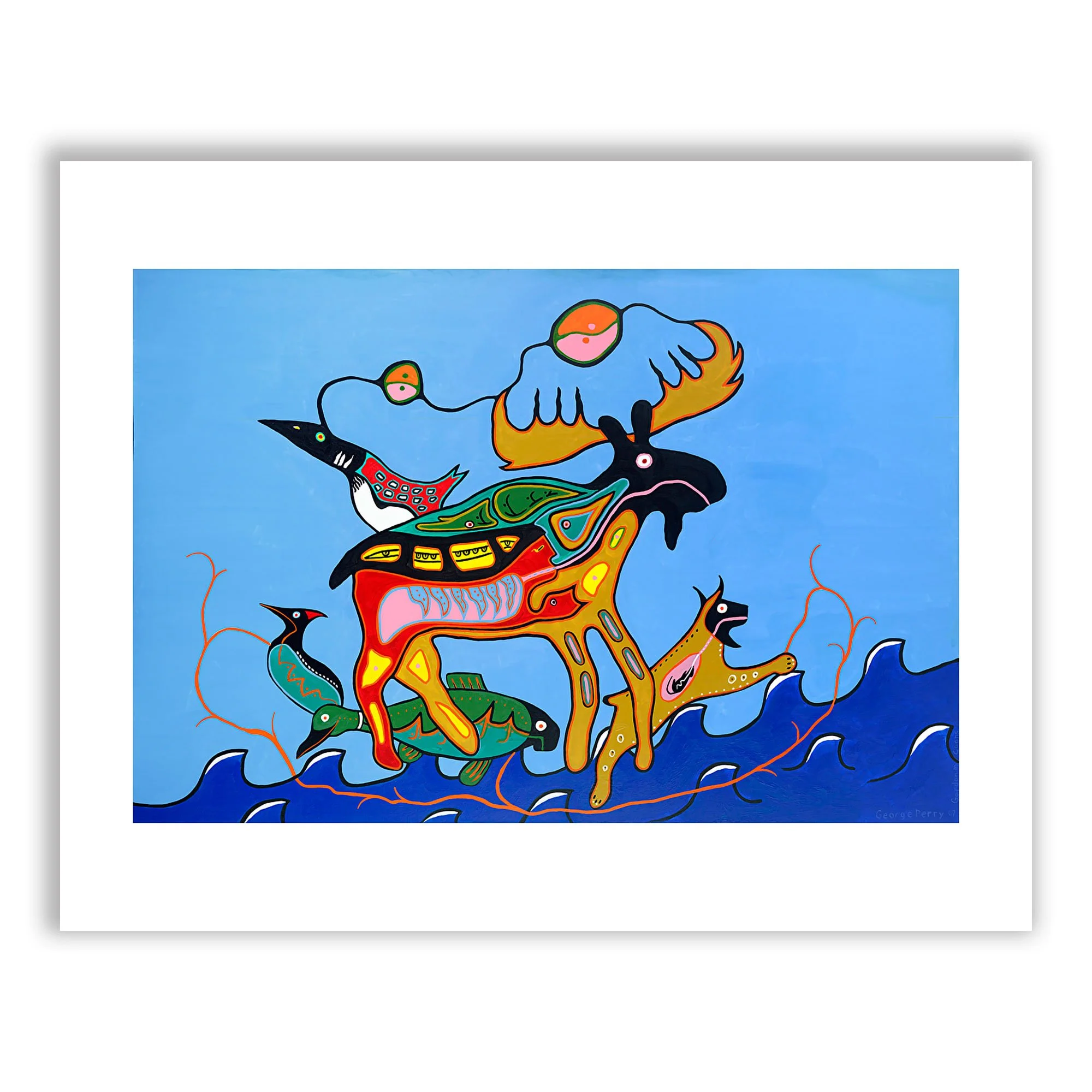
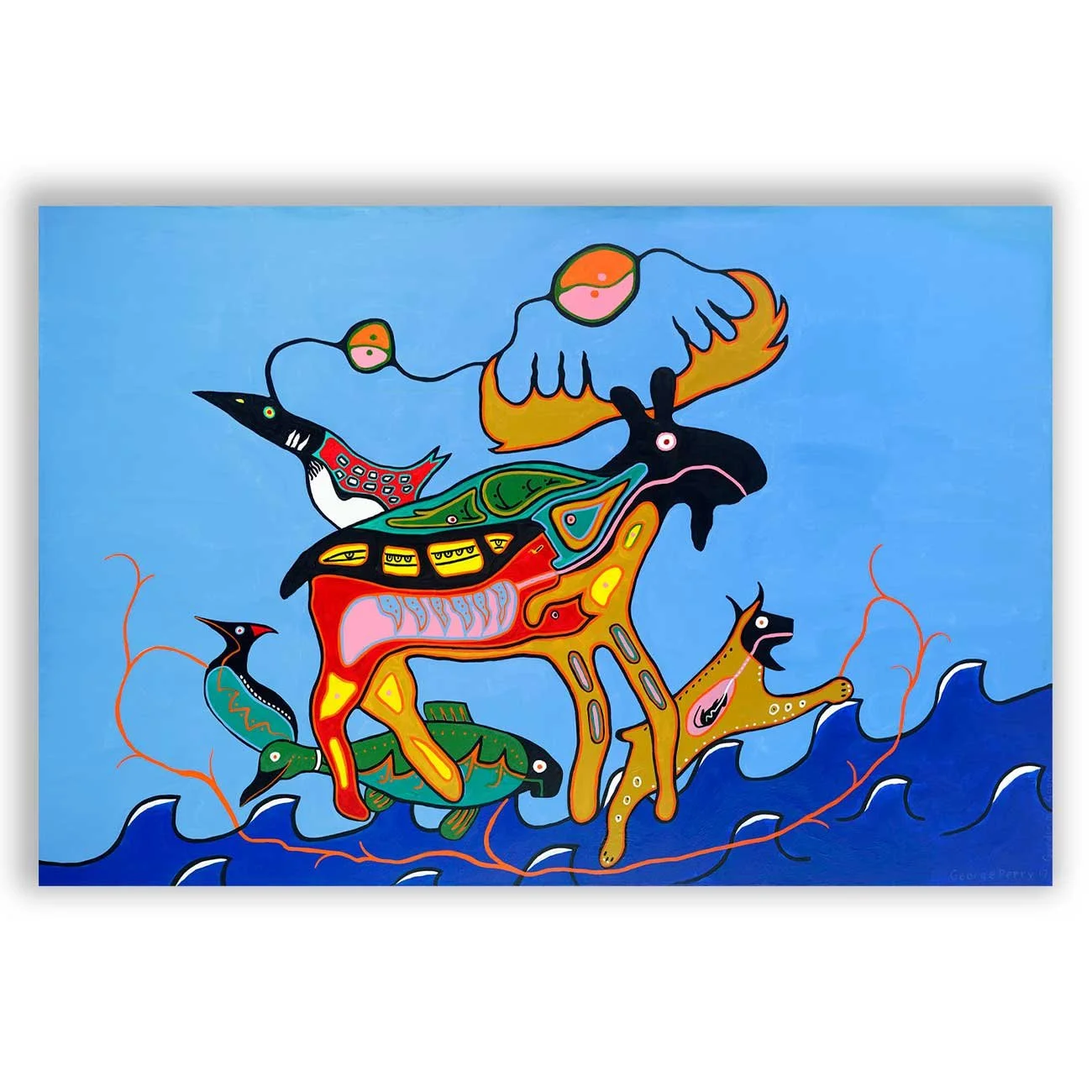
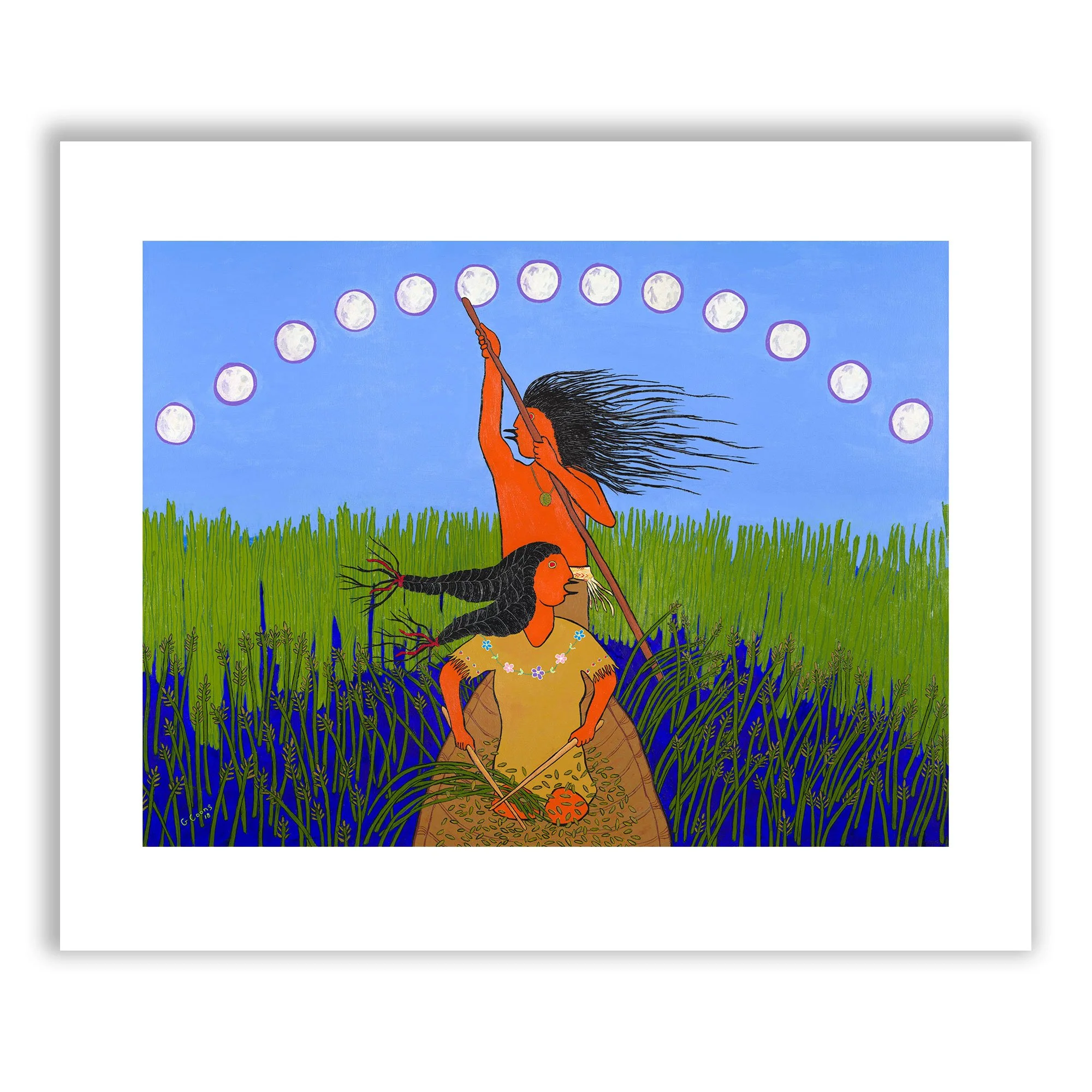
This image represents the memory of harvesting wild rice with my grandfather on the Totagatic flowage north of Lac Courte Oreilles reservation in Wisconsin. This image also respresents the last of seven stops along the migration journey of the Ojibwa people. The Ojibwa people were looking for their final destination where “the food grows on water” (wild rice) and an island shaped like a turtle, which is generally believed to be Madeline Island in Lake Superior.
Wild Rice is Mah-NO-min in Anishinaabemowin. The -min part of the word rhymes with “bin.” It means seed. The first part of the word is a contraction of manido, spirit-giver of this traditionally important and sacred food grain. Ojibwa people know wild rice as “Spirit/Manoomin” gave its name to the moon (month) of harvest, typically the end of August-early September in Northern Minnesota and Wisconsin: Manoominike Giizis, the month when it is harvested. The harvest is a time of fun, but hard work too, as processing the grain on the spot is hard work, even with some modern aids. Manoomin grows as reeds about 8-12 feet tall in water about 3-8 feet deep in Wisconsin, Minnesota and marshes north of the Great Lakes.
-
Gordon is an enrolled member of the Lac Courte Oreilles Band of Ojibwe of Northern Wisconsin and a descendant of the Ottawa tribe in Michigan. Now living in Minneapolis, Minnesota, Gordon is a self taught artist, creating and experimenting with a variety of media including linoleum block prints, paintings, pen and ink drawings, and creations in stone, wood, and assembled sculptures.
Although his artwork is more contemporary, each piece portrays a unique view of traditional Native stories or is a record or impression of Indigenous history in North America.